|
Getting your Trinity Audio player ready...
|
From his early fascination with martial arts to his years in the UFC, Chris ‘The Menace’ Clements has built a life around fighting. Along the way, he developed an unconventional style, earned a reputation for the spectacular, and never lost sight of the joy of it all.
Dresden, Ontario, was no place for a hopeful ninja.
Six years older, Big Brother always tried to convince Younger Brother that he was a ninja. He’d say he had black belts on top of black belts, honours on top of honours. He’d spin broom handles around like weapons, perform kicks and stunts, put on a big act like he was an expert martial artist.
Chris Clements may not have bought his Big Brother’s stories. But he loved them, nevertheless.
Young Chris often headed into the woods around his house to sit on logs trying to meditate like a ninja. In tow, he often brought a box painted black with a red ninja on it, where inside he kept homemade weapons like ninja stars. It was all part of his “ninja club.”
He often snuck out of his room late at night to watch kung fu movies on TV. Those Bruce Lee and Sonny Chiba movies, the ones with the often-mismatched voiceovers, were hard for the brother of a faux ninja to resist. It drove him nuts that they were always on so late. But sneaking into the living room did require some, wait a minute, “ninja-like skills” to not wake the family when turning on the TV, so maybe it was cool after all.
“I really believed in that world as a kid,” Chris says. “I was hooked on that stuff.”
And why not? There wasn’t much else to do growing up in Dresden (Pop: 2,400). There were school sports. But no boxing gyms. No martial arts gyms. Nothing until he got to high school, when a taekwondo gym opened up in the town’s little community centre. That was the first time Chris had access to anything resembling fighting or martial arts.
“When taekwondo finally showed up in town, it felt real. It felt like someone was finally teaching me something I’d already been obsessed with for years.”
Chris was an active kid, but not into organized sports the way many of his friends were. He didn’t play baseball or hockey. His parents weren’t sports people at all. They never played sports growing up (or as adults). The family never turned a game on TV. They certainly didn’t go to games in person.
“They didn’t even come to my sporting events,” Chris laughed.
The first time someone came to watch him do anything was his dad coming to one of his taekwondo tournaments, and that was only because Chris needed a ride.
“But I remember after he watched me win that tournament, I saw this look on his face – this pride – that I had never seen before. That stuck with me. He got a little more interested after that (but still not much).”
Once Chris started taekwondo, he got obsessed with it. Really obsessed. Every school project he ever did in high school ended up being about taekwondo, including a full demonstration of the skills in front of his class.
“It was all I thought about. I didn’t have anything else to put my energy into, so all of it went there.”
And that’s where ‘The Menace’ began.
* * *
Maybe his brother really was a ninja. Maybe it was all those movies. Maybe it’s just how his brain works. But Chris ‘The Menace’ Clements is a natural fighter.
“I was terrible at forms in taekwondo. I couldn’t do the patterns. I was awful at that part. But when it came to sparring, I could fight black belts when I was still a yellow belt. I could just do it. Competing felt natural to me. It felt fun.”
He trained in some unusual settings early on. There was a guy named Mike, a big fella, a born-again Christian with a taekwondo black belt, who worked with young people in a park in Chatham. The deal was, he’d train them, but they had to go back to his house for Bible lessons afterward.
Think ‘Jireugi and Chigi’ meets ‘The Armour of God.’
Mike tried to show Clements an armbar once and dislocated the young man’s right elbow badly. Chris popped it back in like he knew what he was doing. He didn’t. His arm was messed up for over a year.
“It hurt. But I didn’t want to quit.”
So, Chris kept training, even sparring with his right arm in a sling, and that changed him in ways he never expected. With his right immobilized, his left became an incredible weapon. The injury forced him to adapt. He was still beating people – just now with one arm, maybe not tied behind his back, but certainly strapped to his side.
When coaching wasn’t available, Chris simply learned by watching.
“When I was into boxing, I’d watch guys like Floyd Mayweather, Roy Jones Jr., Mike Tyson. I wasn’t consciously studying them. I wasn’t taking notes. I was just watching how they moved. Later on, when I was sparring, I’d try to move the way they looked. I didn’t even realize I was doing it at the time.”
Jones Jr. famously watched roosters fight to develop his moves, his posture, how to taunt an opponent. That’s what Chris was doing, only with humans, not poultry.
“There were things I did in fights – like pulling my arms back, sticking my chest out – that I had clearly absorbed from watching Roy. I just didn’t realize it at the time. That’s still how I teach others. I slow things down. I tell them to watch how the best fighters in the world actually move, not what they say they’re doing, but what their bodies do.”
Learning outside of a system made Chris a unique fighter. He was never stuck in a box. He was unorthodox. In part, that’s because he had to be.
“I’m 5-foot-9 with a short reach. Most guys I fought were 6-foot-1, 6-foot-2, with way longer arms. Traditional striking didn’t work for me. I couldn’t just jab with them. So, I had to come in at angles. Over. Under. From weird spots. I had to be sneaky,” he explained.
“I didn’t want to get hit. I wanted to hit you without getting hit back.”
He also relied on instincts. He trusted his eyes and what they saw developing in front of him (often over the shouts and advice of the team in his corner).
“That frustrated some coaches who wanted it to work like a video game: call the move, execute the move. That just wasn’t how I fought. I had to react. I had to adjust in real time.”
That also made him a pain to spar with. In fact, a lot of other fighters refused to spar with him because he was too unpredictable. Chris admits there were times even he didn’t know what he was going to do next. “And if I don’t know, then you don’t know either.”
In the ring, he was always smiling. He talked to people. He wasn’t disrespectful. But he saw his smile as survival. If he went in angry or tense, he knew he would burn energy too fast. He didn’t want that. But there was something else beyond strategy.
He really loved what he was doing.
Really loved it.
There was a joy he found in the ring.
“My first pro fight, I was nervous. Same with my first UFC fight. But I handled it the same way both times. I came out dancing to Rockin’ Robin. It sounds silly, but that song made me happy when I was a kid. I used to dance around with my little sisters to it. If I came out to angry music or something aggressive, it would tighten me up. I didn’t want to be tight. I wanted to be loose.”
Staying happy was all part of his strategy. Maybe there’s a lesson in there for us non-fighters, too.
“Happiness keeps you relaxed. Relaxed means efficient. If you’re angry, you’re tense. If you’re tense, you’re slow. That’s just how it works.”
* * *
Flip to his picture in his Grade 12 yearbook. You’ll find two words where Chris was asked where he would be in 10 years: “Professional fighter.” He didn’t know what kind of fighter yet. But he knew he wanted to fight as a career.
That’s when the UFC arrived.
On Nov. 12, 1993, UFC 1: The Beginning was the inaugural mixed martial arts event held by the Ultimate Fighting Championship (UFC), in Denver, Colorado. Co-created by Rorion Gracie and Art Davie, the event was designed as an eight-man tournament to test which martial arts style was superior in a real, no-weight-class fight.
No judges. No time limits. In fact, there were barely any rules at all: No biting, eye gouging, or groin strikes were allowed. That’s it. Have at it.
Fighters competed inside a chain-link fenced-in octagonal cage designed to keep them from falling out the way they might from a traditional 10-by-10-foot-square boxing ring.
Chris’ dad had a friend with one of those huge satellite dishes in the backyard. He recorded it on VHS for Chris. That tape was nothing but more fuel on an already raging fire.
“I remember watching Royce Gracie beat everybody and thinking, honestly, that I could beat him. I thought I could kick him in the head. That’s how my brain worked even then. I wasn’t just watching; I was thinking about how to beat him.”
That was Chris. He’d watch hockey fights and study them, even though he didn’t even play hockey. He’d just watch how guys moved, how they grabbed, what worked and what didn’t.
“I was doing that at 17 years old. I was obsessed with understanding fighting, not just doing it.”
Plus, he has always enjoyed hitting things. It wasn’t rage. People may have thought that, but it wasn’t that, he assured. He just liked how it felt hitting things. He’d punch signs, walls, posts. His bedroom door had more than one hole through it.
“My parents were furious,” Chris laughed. “But I liked testing my hands. I’d show people I could punch things without hurting myself. That was just something I enjoyed.”
That was until he broke one of his best friend’s jaw at school. He was the first person Clements ever punched. It happened in the cafeteria. He got arrested right there at school. Chris had just turned 18 years old and got 10 days in jail for assault causing bodily harm.
To stay sane, he continued to train in jail.
Inside, he became friends with a guy named Cliff, a big fella who was in jail because he duct-taped a guy naked to the hood of his car in winter and drove him around town. Chris and Cliff made punching pads out of books wrapped in towels and did chin-ups on bunk beds.
“I was the youngest guy in there. It scared me, even though no one really messed with me.”
Over the next several years, Chris continued looking for opportunities to train and develop as a fighter.
Chris had largely pieced together his early training himself until Supreme Martial Arts opened in Sarnia, Ontario, where he was living with friend and fellow fighter John Fraser. Then came the connection that changed his career. Clements met renowned Canadian trainer Shawn Tompkins at a Chuck Liddell seminar and eventually moved to London to become part of Team Tompkins.
There was no glamorous full-time-fighter existence waiting for him there. Chris worked wherever he could while he trained: pizza places, factories, a chemical plant and even building transport trucks. Fighting was the destination. The jobs paid for the trip.
* * *
Ontario was a strange place to try to become a professional mixed martial artist in the 2000s.
The sport was growing everywhere around Chris Clements. The UFC had gone from a weird late-night spectacle to a legitimate sports property. Canadian fighters were becoming stars. Fans here were buying pay-per-views and travelling across provincial and international borders to see fights.
They just couldn’t legally watch professional MMA live at home.
Ontario regulated boxing and kickboxing, but it refused to sanction professional MMA. For fighters like Chris, that created a ridiculous situation: You could live here. Train here. Build a gym here. Develop some of the best fighters in the country here. But when it came time to actually fight, you had to leave.
Most Ontario fighters looked east. Quebec had regulated MMA years earlier and developed a thriving fight scene. But crossing the provincial border didn’t necessarily mean opportunity. Promoters had their own fighters to build, their own tickets to sell and their own local stars to protect. An unknown guy driving in from Ontario wasn’t bringing much to the table except the possibility of beating one of them.
For Chris, that meant stretches of waiting. Injuries to his ankle, elbow and knee cost him time, too. Even when his body was ready, however, an opponent often wasn’t.
Most of the opportunities he did score had to do with the team he was on. Guys like Sam ‘Hands of Stone’ Stout and Mark ‘The Machine’ Hominick were already doing really well in those organizations. Mark was a champion at the time.
Because of that, Clements got a little more respect than others might have.
“We weren’t just random outsiders. That helped me get fights that I probably wouldn’t have gotten otherwise.”
Ontario finally relented in 2010, announcing that professional MMA would become legal in the province beginning Jan. 1, 2011. By then, six other Canadian jurisdictions and 46 U.S. states had already welcomed the sport. Ontario had spent years watching from the sidelines.
On April 30, 2011, UFC 129 arrived at Toronto’s Rogers Centre. For a generation of Ontario fighters who had spent years leaving home simply to compete, the biggest MMA organization in the world was suddenly fighting in their backyard.
Chris had spent most of his career on the wrong side of that dividing line.
* * *
Chris Clements was 29 years old when he made his professional MMA debut in 2005.
That was a late start, especially for someone who had been dreaming of becoming a professional fighter since he was a kid.
His career was unusually stop-and-start. He fought just 14 times over his first seven years. There were injuries. There was Ontario’s refusal to sanction professional MMA. And, increasingly, there was the problem of convincing someone to get into a cage with a guy who kept knocking people out.
And then came the three-second knockout.
“That was kind of a turning point,” Chris said, “but not in the way people might think.”
The fight fell on his wife’s birthday – Cinco de Mayo – in 2006. It was his first fight in TKO, which at the time was the biggest organization in Canada. It was basically Canada’s UFC. That was the stage he wanted to be on.
Facing Lautaro Tucas, who was making his professional MMA debut, Chris needed to cut weight from 170 pounds from 195. That’s quite a lift.
“I didn’t really know how to cut weight back then. I dehydrated myself badly. I remember coming out of the sauna and not being able to talk properly. My heart was pounding so hard I could feel it everywhere. I didn’t know what I was doing. I just thought that’s what fighters did.”
His wife had just started dating him. She came to watch.
“I had all that going on in my head.”
The bout was early in the night, one of the first fights on the card. The arena was basically empty. People hadn’t even taken their seats yet.
“The bell rings and Lautaro just runs straight at me. No hesitation. As he’s running, his hands drop and his chin pops up. It was right there in front of me. I swung, hit him, and he was out. I kept hitting until the ref stopped it because the adrenaline was so high.
“Later, I actually timed it. The knockout itself was closer to one second, but the official time doesn’t stop until the ref steps in. So, it goes down as three seconds.”
He didn’t even get to celebrate it properly. The arena was empty. He walked around afterward and nobody even knew he’d fought.
“It didn’t feel like this big moment people imagine. I was actually angry at first. I’d done all this work to get there, cut all that weight, and nobody saw anything. Then I found out it was a world record and thought, ‘Okay, that’s kind of cool.’”
Tucas never fought again, in case you were wondering. The knockout was a world record and, weirdly, it made things harder for Chris.
“Once you knock someone out that fast, people get scared. Promoters don’t want to pay extra money to convince someone to fight you, especially when you’re not selling tickets for them. So, instead of momentum, I hit another wall. Fewer fights. Longer waits.
“People would ask for more money to fight me. Promoters didn’t want to pay it. So, I’d sit. That’s why when I did fight, I made it count.”
Eventually, he became selective about opponents. He had reached a point where he wasn’t going to fight anyone unless it moved him closer to the UFC.
It was a gamble. But Chris knew exactly what he was gambling for.
By late 2011, there wasn’t much runway left. At 35, he knew another loss could effectively end his chance of ever reaching the UFC. He needed recognizable names on his record, and he needed to beat them.
The biggest test came that December against former UFC fighter Rich Clementi in Sarnia. Chris knew what was at stake before he entered the cage. Lose and there probably wasn’t enough time left in his career to build another four- or five-fight winning streak and force the UFC to notice him again.
He beat Clementi in front of a hometown crowd. It was his fourth straight victory, a run that also included another former UFC fighter, Jonathan Goulet. More importantly, it gave the UFC one fewer reason to keep passing him by.
“After I beat Rich (Clementi) and Jonathan (Goulet), my phone started ringing. Managers calling nonstop. Everyone wanted to represent me. I told them all the same thing: Get me to the UFC, and then we’ll talk.”
Then the call finally came.
“I was on a treadmill training for another fight. I got the call and just said, ‘Okay. Send the contract.’ I remember trying to tell my wife when I got home and just not being able to get the words out. She was pregnant. We’d just gotten married. Everything was happening at once.”
And everything kept happening.
Their daughter, Averie Belle, was born March 9, 2012, little more than a month before Chris was scheduled to make his UFC debut. Soon afterward on social media, he posted a photo of his newborn daughter curled around a pair of UFC gloves. He had spent years waiting for one life-changing moment. Two arrived almost together.
The timing could have been even tighter.
UFC 145 had originally been scheduled for March 24 in Montreal, uncomfortably close to Averie’s due date. The card was eventually moved to April 21 in Atlanta. Chris suddenly had a few more weeks at home with his daughter before leaving for the fight he’d spent most of his adult life trying to get.
Karissa handled nights with the baby while Chris slept in the basement spare room so he could get up early to train. He was 36 years old, a new husband and a new father preparing for the biggest fight of his life.
* * *
He remembers the walkout well.
He came out to Rockin’ Robin. Same thing he’d always done, even though it irritated almost everyone around him. But that song just put him in a good place. He was singing to himself, dancing a bit.
“When I got to the cage, I remember circling it for a second, just looking around. Then I went into the middle of the cage and laid down right on the logo. I put my hands behind my head, crossed my legs, and just stared up at the lights.
“I remember thinking, ‘This is really cool. I actually made it.’ That was the moment it really hit me.”
‘The Menace’ made his UFC debut against Keith Wisniewski at UFC 145 in Atlanta on April 21, 2012. There were no nerves. Chris had been more nervous for fights before that, especially the ones where he knew everything depended on winning.
But this first UFC fight felt different. He’d already done the things he set out to do.
In that moment, he thought about the words of legendary UFC fighter Burt Watson: “It’s hard to get here, but it’s even harder to stay.” That always stuck with him.
“But in that moment, I wasn’t worried about staying. I was just happy I’d arrived.”
As you might guess, that’s a different mindset than most fighters. And, honestly, that became a problem. Most guys get to the UFC and think, ‘Okay, now the real work starts.’ For Chris, he felt like the work was already done.
That moment was his goal since he was a kid. The ninja had arrived. The kid from Dresden who sat on logs meditating like a ninja was lying in the middle of a UFC cage in Atlanta.
“Instead of being obsessed with winning titles or climbing rankings, I just wanted to enjoy it. I wanted to put on a show.”
That became his version of winning. He wanted to be exciting. He wanted to get bonuses. He wanted people to remember the fight, whether he won or lost.
He wasn’t afraid to lose if it meant doing something interesting. Looking back, that’s probably why he didn’t go on some big run. But at the time, it felt right.
He defeated Wisniewski by split decision – remarkably, the only decision victory of his professional career.
“That win made it even more surreal. I remember talking to the guy during the fight. You can actually see it on video. I’m saying stuff to him. I’m just enjoying it. It didn’t feel like life or death to me. It felt like, I’m here. This is happening.”
That feeling carried into later fights, too.
During his next bout against Matt Riddle – a no contest on June 21, 2012 – Chris held his opponent up against the fence near the end of the fight and said something like, ‘Are you ready to actually fight now, or what?’
“I wasn’t angry. I wasn’t scared. I just wanted to engage. I wanted to have fun with it. I ended up doing something stupid and putting myself into a choke, but even then, I wasn’t thinking about protecting a record. I was thinking about the moment.”
Chris admits that once he accomplished his goal, he didn’t set another one. He knew he wasn’t going to be a champion at his age. So, instead of chasing something he didn’t fully believe in, he focused on enjoying the experience.
“That’s not how the UFC works. They want wins. They want momentum.”
Chris then lost to future UFC welterweight title challenger Stephen ‘Wonderboy’ Thompson before rebounding with a first-round TKO of Vik Grujic in Australia.
Months after that match, Chris was at home, drinking a glass of wine, eating chips and watching TV when he got a call to fight Nordine Taleb on three weeks’ notice. He stepped on the scale: 207 pounds. He had to cut 37 pounds in three weeks. Rough. But he took the fight anyway.
The fight was in Montreal. His home country. And the UFC told him: You’re doing us a favour. Win, lose, or draw, your job is safe.
So, he did it. He made the weight. Chris lost by unanimous decision. Then he got cut. He finished his UFC career with two wins, two losses, one no contest.
That still irritates him. Not the record. Just the exit.
“Not because I wanted to keep fighting forever, but because I didn’t get to end it on my terms. I was planning to retire after my next fight anyway. But I wanted to walk into the cage knowing it was the last time. I wanted that closure.”
Instead, it just ended.
“My wife asked me a simple question: Do you really want to go fight somewhere smaller now, knowing you’ve already been to the top? Do you want to be someone else’s stepping stone at 40? She was right. I didn’t. So, I stopped.”
He was 39 years old. For someone who had spent most of his career simply trying to get there, Chris had managed to stay in the UFC for an incredible three years.
He finished his professional career 12-6 with one no contest. Eleven of his 12 victories came by knockout or TKO. He never submitted anybody. Only once did he win by decision. If he beat you, chances were pretty good somebody was stopping the fight.
* * *
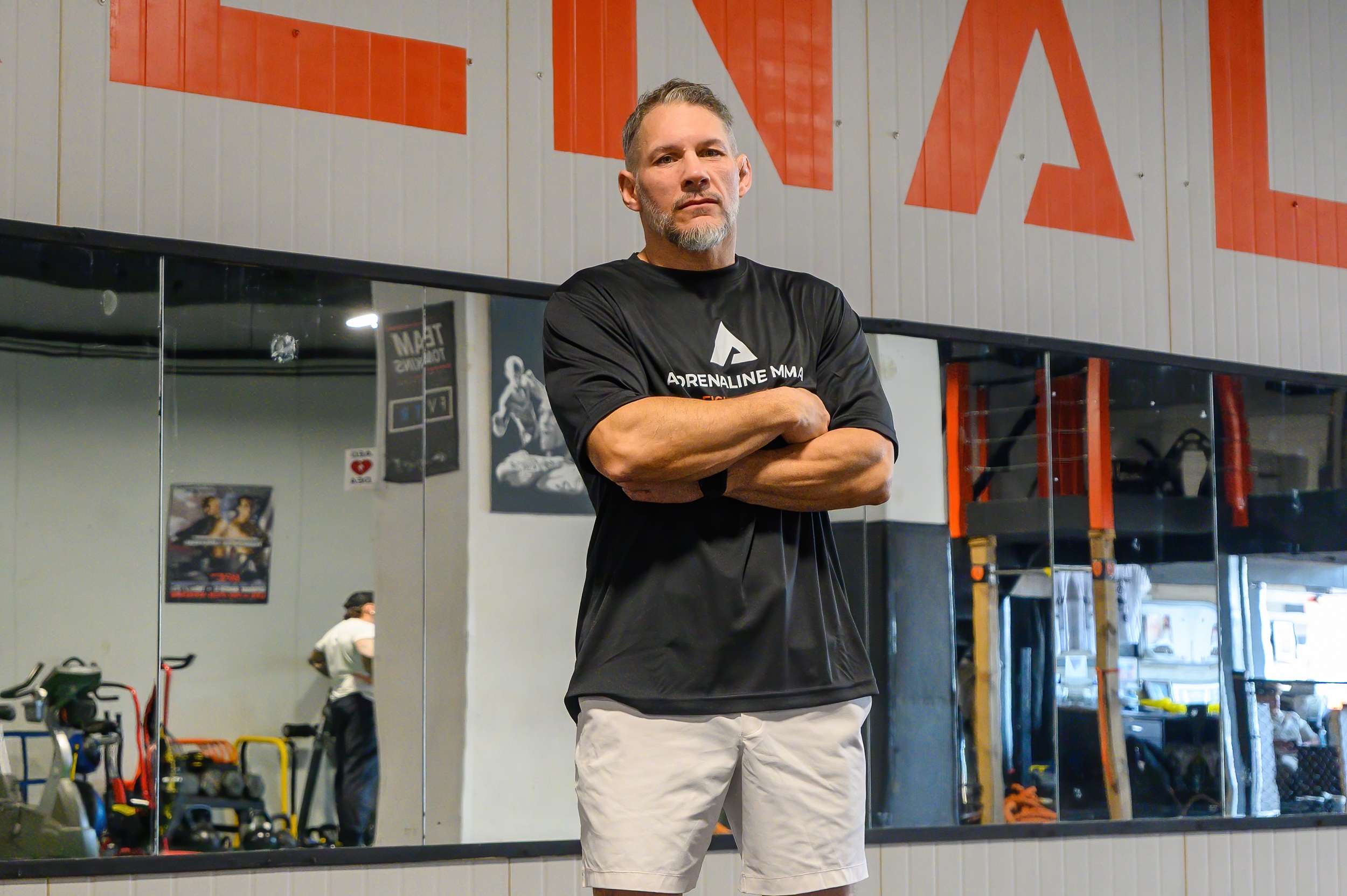
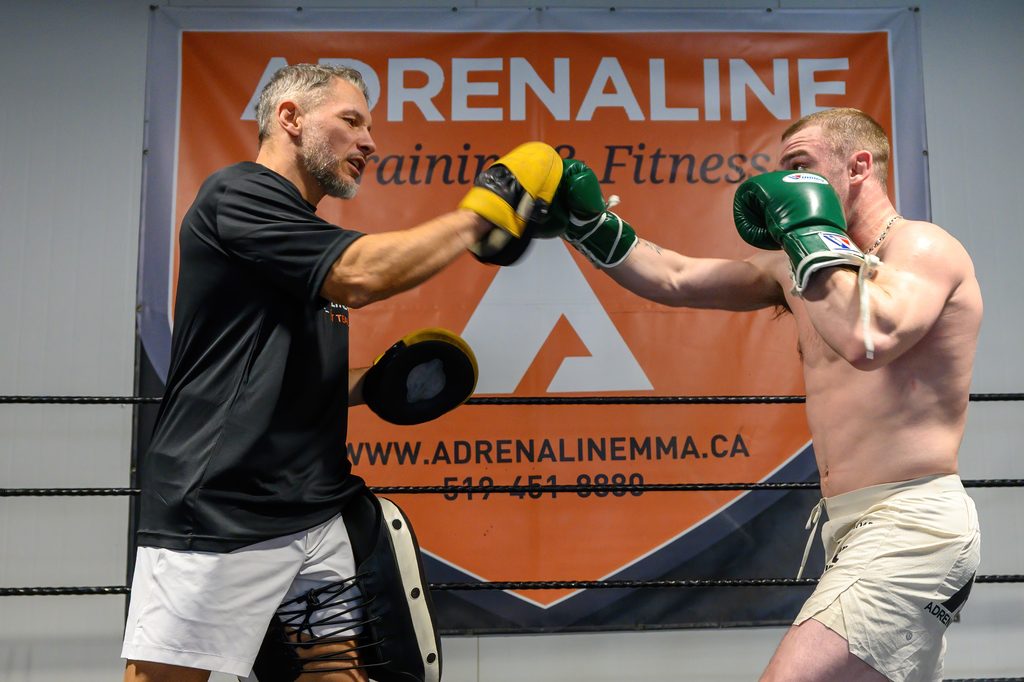
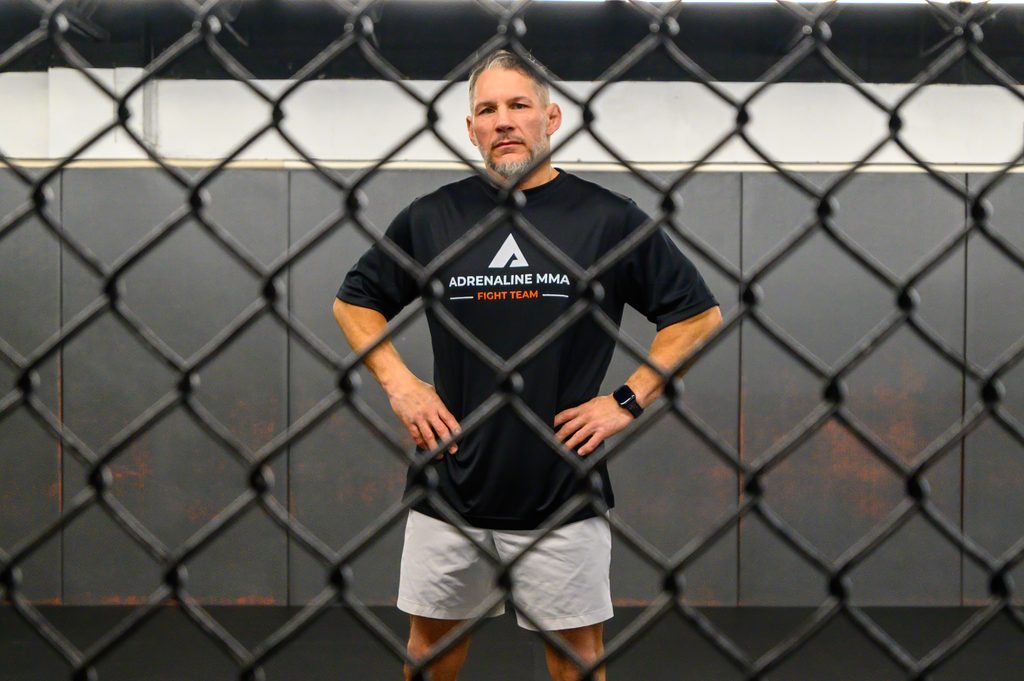
Now 50 years old, he has become what he lacked for so many years growing up: a real coach for the next generation of fighters as an elite trainer at Adrenaline MMA & Fitness.
“Honestly, the transition wasn’t that dramatic for me. I think that surprises people. A lot of fighters really struggle with that transition, but I didn’t.
“Part of that is because I was already coaching full time while I was still fighting. My day-to-day life didn’t suddenly change. I didn’t wake up one day and realize I had nothing to do. I was already in the gym every day, already teaching, already thinking about fighting from a different angle. So, it didn’t feel like something ended. It felt like something just shifted.”
Most people fight first, then coach. Chris – known in coaching circles as the Striking Mechanic – became a better fighter by teaching. Teaching forced him to understand what he was doing, not just do it.
“I don’t teach systems. I teach movement. I tell people all the time: Don’t teach what you were taught. Teach what you actually do.”
Chris knows he is one of the lucky ones. He never needed to replace being a fighter with being something else. He had already done the thing he wanted to do. He didn’t feel like he lost anything.
“A lot of fighters tie their whole identity to competition, and when that’s gone, they don’t know who they are anymore. I didn’t have that problem. Fighting was never about validation for me. It was curiosity. It was movement. It was obsession with understanding how bodies work.
“That doesn’t go away when you stop competing. If anything, it got stronger.”
Even as a coach, he’s still that same unorthodox kid he always was. For instance, he hates the rigid systems most gyms force on people.
“They don’t account for individuality. Everyone’s built differently. Everyone processes information differently. Everyone reacts differently under pressure. If you teach everyone the same system and tell them that’s the ‘right’ way, you’re going to lose a lot of potential.”
He stresses that he doesn’t try to mould anyone into versions of himself. He simply tries to help them become the best version of themselves they can be.
“A lot of people think fighting has to be serious or violent, so they tense up. Their brain goes into this rigid mode and their body locks up. When I coach, I’ll get people to dribble a basketball or move like they’re playing soccer. Once they’re loose, and just having fun, their body starts doing the work. That’s where real learning happens.”
* * *
He misses moments, not the lifestyle. Cutting weight. Training camps. Being injured all the time.
He doesn’t miss any of that.
He misses the feeling of figuring something out in real time. He misses the camaraderie. He still gets some of that from coaching. But it’s not the same. And that’s OK.
Perhaps that’s why he’s now setting out on a second pursuit, bodybuilding, competing in his first show in November.
What’s the quote? “It is a shame for a man to grow old without seeing the beauty and strength of which his body is capable.” I think Socrates said that. Or maybe it was Arnold or Sly.
No matter, the sentiment remains.
“Fighting showed me my strength. I want to see my beauty,” Chris said. “I’ve always been fascinated with how bodybuilders looked like superheroes. Plus, I grew up in the Schwarzenegger and Stallone era. Those were my heroes. Now that I’m 50, it’s the youngest I’ll ever be, so now is the best time.”
Looking back on his fighting career, Chris doesn’t even feel like he left anything unfinished.
“My career was my own. I didn’t fight the way people expected. I didn’t chase the things people told me I should chase. I didn’t stay angry just to look tough. I had fun. I learned. I enjoyed it. That matters more to me than any record.
“I didn’t end it exactly how I wanted to, but I don’t feel robbed of anything important. I lived the life I wanted to live. I chased the thing I was obsessed with as a kid and actually caught it. Most people don’t get to say that.”